Mediated Chiasm
Mediated Chiasm
at Inter Arts Matrix
November 21-23, 2025
Curated by Danielle Petti
Artists:
Paige Smith
Derek Koehler
Stephanie Florence
Mediated Chiasm explores the crossing point between perception and the structures that shape it. In Merleau-Ponty’s terms, a chiasm is the reversible relationship between body and world; an intertwining in which the body perceives the world while simultaneously being shaped, oriented, and affected by it. The way we see, touch, hear, and experience is always influenced by what surrounds us.
This exhibition focuses on what happens when that crossing is mediated or unmediated. Who controls our perception? How might we obstruct our own perception of the world? In what ways is the unfolding of perception being intervened upon?
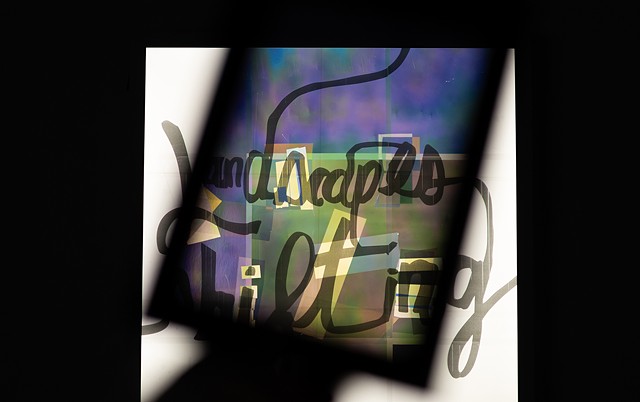
Smith’s work puts perceptual control into the viewer’s hands: shifting perspectives shape how everyday environments are sensed. Koehler’s piece brings phenomenology into the present moment, where the sensed is algorithmically reframed. Florence’s work returns to the chiasm itself, reminding us that our bodies and the world continually cross and co-create experience.
Derek Koehler
Artist Statement
In April 2024, the New York Times reported that OpenAI had transcribed, without permission, over 1 million hours of YouTube videos to feed into the training of its AI system, GPT-4. An earlier precedent was set by Yahoo when, after acquiring the photo-sharing site Flickr, it assembled nearly 100 million photos that had been shared on the site into the YFCC100M research dataset. IBM later used a part of this dataset to train facial recognition programs.
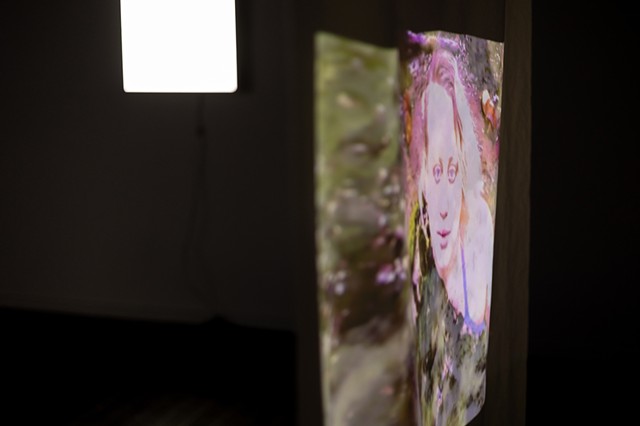
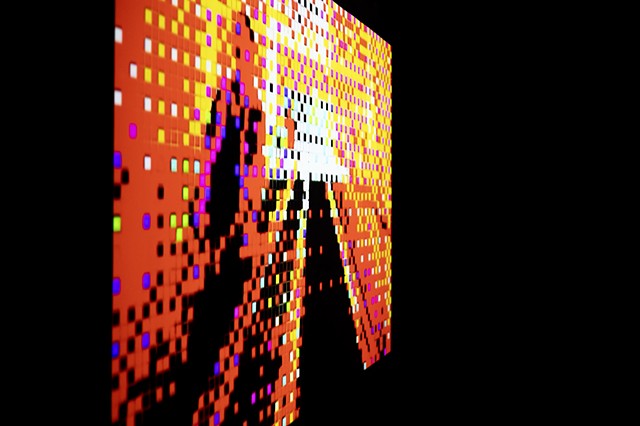
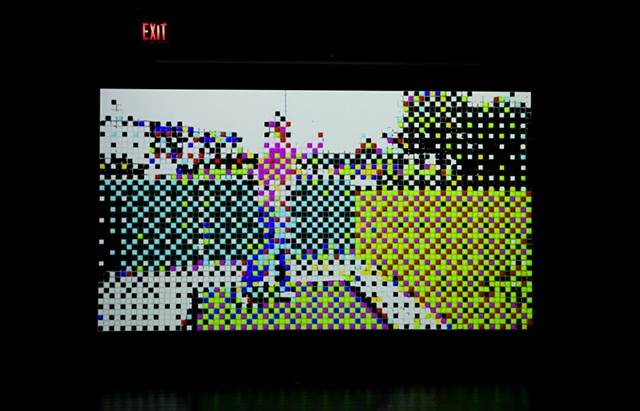
Although the YFCC100M dataset is largely comprised of photos, it also includes about 800,000 videos that were shared on Flickr. Spectacle focuses on a selected subset of these videos that were trimmed to 8-second clips and compiled in the KoNVid-1k dataset, which is used to train algorithms for video quality assessment.
The degradation of the source video produced by algorithmic dithering is a reminder of the distillation process by which personal videos recorded to share meaningful events have been reduced to spectacle, or content, for which the previously incidental characteristics of the video (its playback quality) have become central to its value, while the events they recorded have become incidental.
The title of the work references Guy Debord’s 1967 book The Society of the Spectacle: “In societies where modern conditions of production prevail, life is presented as an immense accumulation of spectacles. Everything that was directly lived has receded into a representation. The images detached from every aspect of life merge into a common stream in which the unity of that life can no longer be recovered.”
Stephanie Florence
Artist Statement
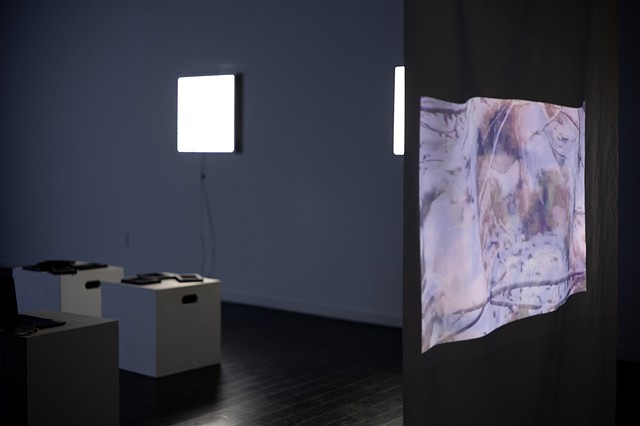
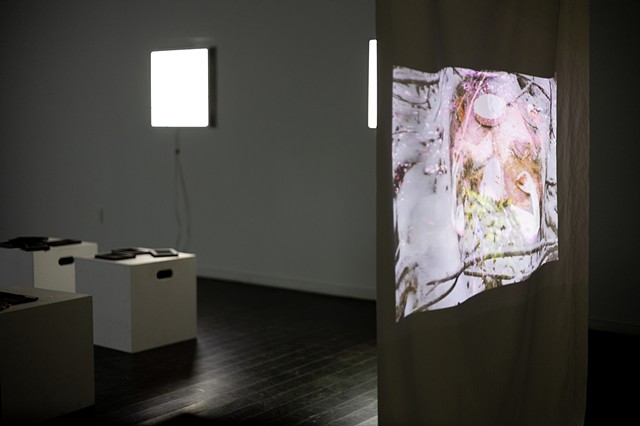
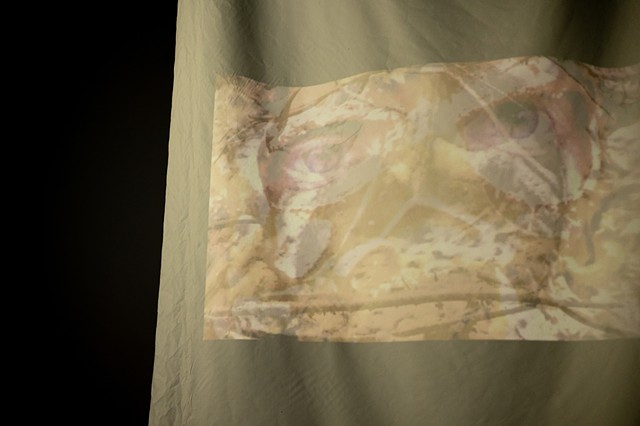
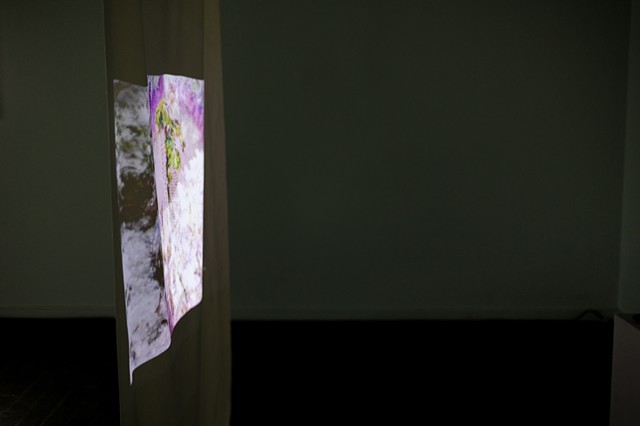
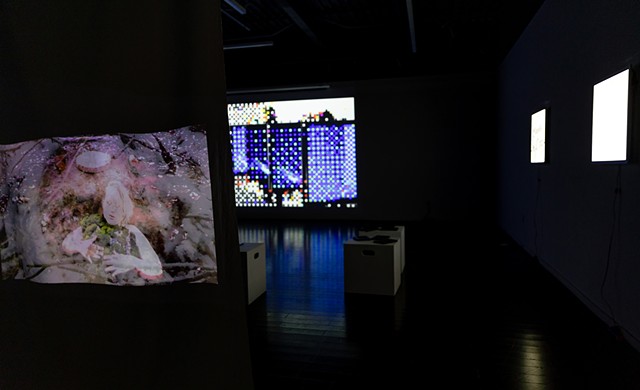
The video and audio production of Portal into Discordia has been in production for over 4-years with the collaboration of Moss, Fungi, Soil, and Land. This collaboration began when Stephanie Florence found Moss infested with parasites tossed from a rooftop in the University of Waterloo landscape. Florence used spa-like buttermilk bath treatments to remove the parasite, but many Moss pads perished. The displaced Moss then found a permanent home on a blanket crocheted by Florence’s Grama. This Moss still growths and colonizes this blanket today. The poetry recorded in the video was written and mixed by Florence in the Moss and Fungi filled forest close to where they live. Lastly, the narrative of the video follows Florence into a Moss filled dream where the Land colonizes Florence. All of these recordings and smaller artworks have combined into this final video and audio production.
Paige Smith
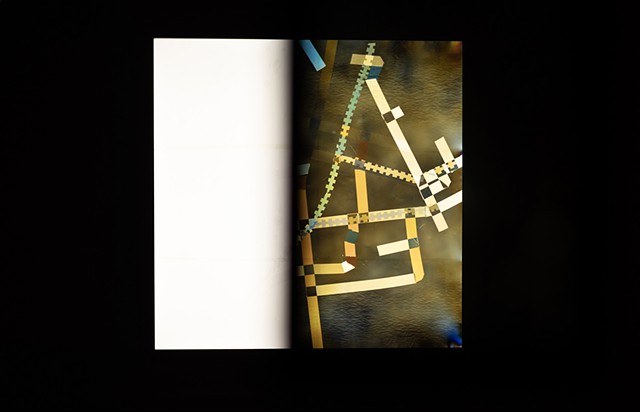
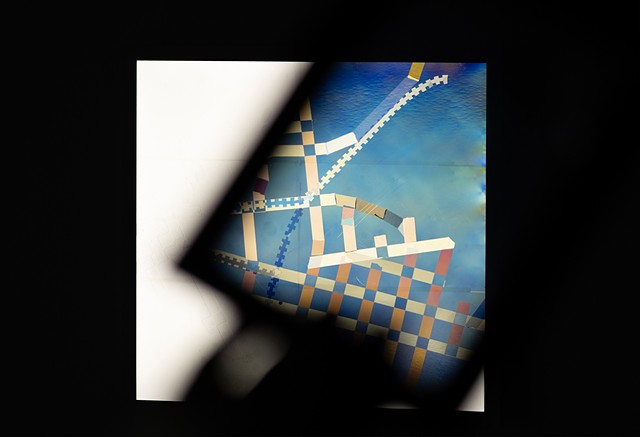
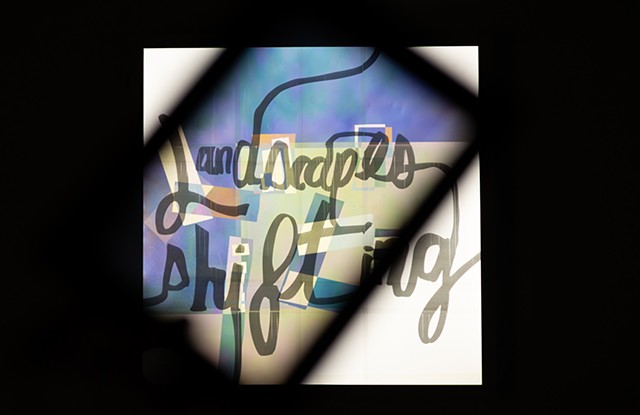
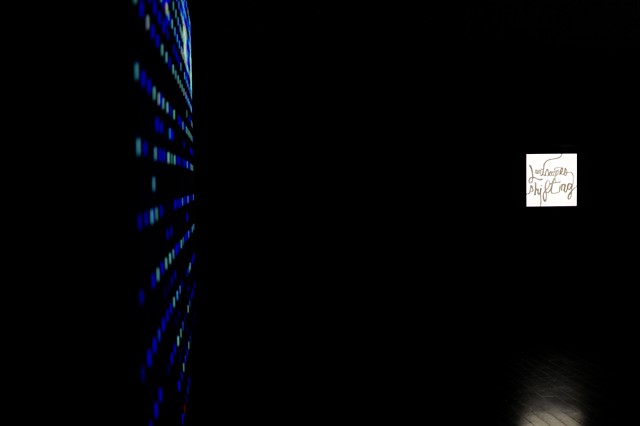
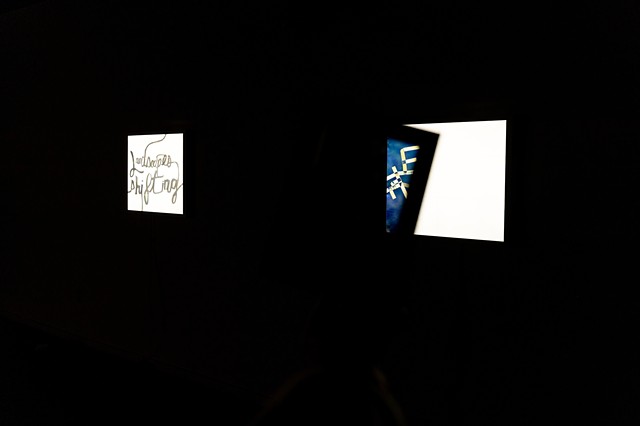
Landscapes Shifting asks how transit writes itself into the body. I treat the Kitchener–Waterloo light rail as both site and instrument. Two backlit light boxes hold layered text and map imagery, and visitors use small polarized frames to reveal an invisible map that shifts as they move. Alongside the visuals, a stereo soundscape built from my field recordings of ION trains translates rail noise into music-like textures that rise and fall with the space. The piece reflects my mix of artist and scientist. I work empathetically and analytically, drawn to problems I can test and images I can feel first. Here the question is simple: notice what changes in your seeing and hearing, then notice what that change does to your sense of place. Commuting is not only logistics; it choreographs attention, sets mood, and shapes how we meet each other in public.